
🔬 Research & Lab Use Only: Look, let’s get the legal stuff out of the way first. Everything discussed below regarding peptide bioregulators is strictly meant for laboratory research, in vitro experiments, and scientific testing. None of this is approved for human consumption, medical treatments, or diagnostic use. This is purely an educational deep-dive into published science.
If you’ve been hanging around the longevity or biohacking spaces recently, you’ve probably seen the phrase peptide bioregulators pop up a lot. Honestly, right now, peptide bioregulators are easily one of the most talked-about topics in cellular health and tissue research.
The massive spike in online interest leaves a lot of people confused. Cut through the noise, and the actual laboratory data shows a completely different story than what you see on social media. Let’s focus entirely on how these compounds perform when placed under a microscope in a controlled laboratory setting.
What are we actually looking at here?
To put it as simply as possible, peptide bioregulators are tiny chains of amino acids—usually just 2 to 4 links long. In nature, your body’s tissues naturally produce these little guys to act as cellular messengers. Their main job? Telling cells to get to work and start making proteins.
But here is where things slow down: as research models age or deal with heavy environmental stress, natural bioregulator levels take a massive dive. When those messengers disappear, cellular repair slows to a crawl, and tissues start to show their age.
By introducing synthesized versions into a lab environment, researchers are trying to give those tired cells a much-needed wake-up call. It’s not about forcing the organ to do something crazy; it’s about restoring the natural baseline so the tissue can fix its own gear.
The Main Types Dominating the Research Space
When you look at the raw data from independent research hubs, scientists aren’t just looking at a one-size-fits-all peptide. They are focusing on organ-specific targets. A few key variants are getting most of the attention right now:
- Testagen (The Men’s Tissue Focus): In lab settings, Testagen is used to study testicular cell recovery. Unlike external hormone therapies (like TRT or steroids) that make the body lazy, Testagen does something different. It focuses entirely on local protein synthesis, helping the tissue maintain its own natural machinery.
- Ovagen (Liver & Metabolic Evaluation): This one is studied strictly for hepatic tissue. Researchers use it to watch how liver cells bounce back from stress and how metabolic pathways clean themselves up at a genetic level.
- Prostamax (Prostate Architecture): Specifically designed for prostate tissue models, this peptide is being heavily analyzed for its ability to keep cellular structures stable and prevent localized tissue stress from getting out of hand.
How It Works Under the Hood
Things like stress, getting older, and environmental damage basically mess up these signal paths. This makes it really tough for the cell to read its own instructions.
Peptide bioregulators help by acting like a quick workaround. They are tiny enough to bypass the normal cellular traffic, going straight past the membrane and directly into the nucleus where they bind to specific DNA spots.
Once there, they basically hit a quick reset switch. They don’t introduce weird foreign chemicals or push the organ to overwork. They just hand the cells the clean, uncorrupted instructions they need to start rebuilding proteins efficiently.
Sourcing Peptides? If it isn’t Tested, It’s Garbage
Since everybody is talking about these peptides right now, a bunch of random websites are popping up to make a quick buck. They sell cheap, weak powders mixed with random fillers.
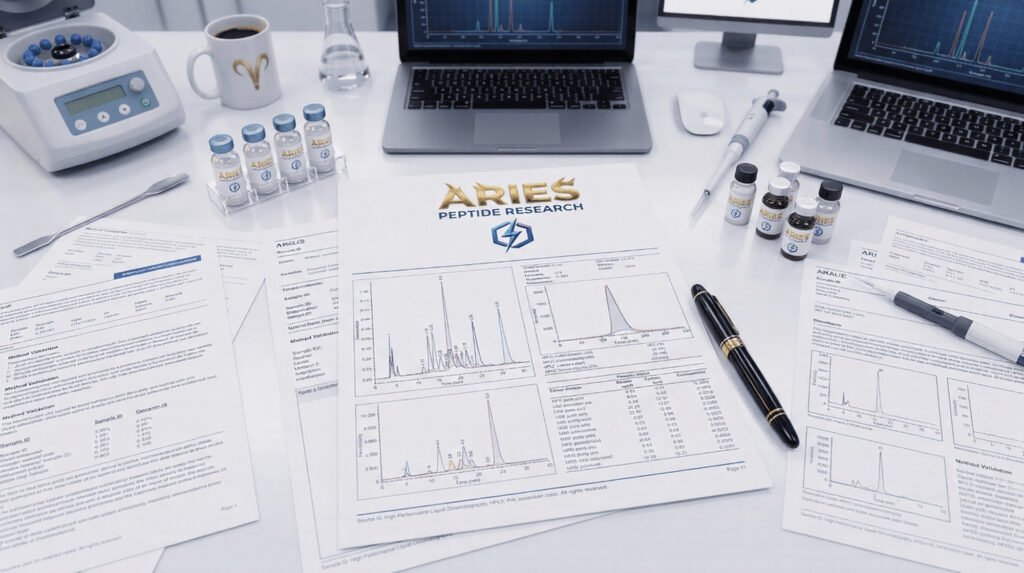
If a vendor refuses to give you a fresh, independent lab report—like a Certificate of Analysis—just close the tab. Seriously, without real third-party verification, you are pretty much just throwing your cash away on unverified junk.
For researchers who need real, documented batches that actually match their labels, you have to stick to specialist suppliers who take testing seriously. According to official molecular biology guidelines on NCBI PubMed, verified purity is crucial for any legitimate study. If you need trusted batches for evaluation, you can check the Aries Peptide Research product catalog to source verified options.
Final Thoughts
At the end of the day, peptide bioregulators aren’t some magical potion. They represent a very logical, targeted approach to cellular biology. Instead of trying to override the body’s natural systems with harsh external inputs, they work directly with the DNA blueprint to help tissues fix themselves from the inside out.