
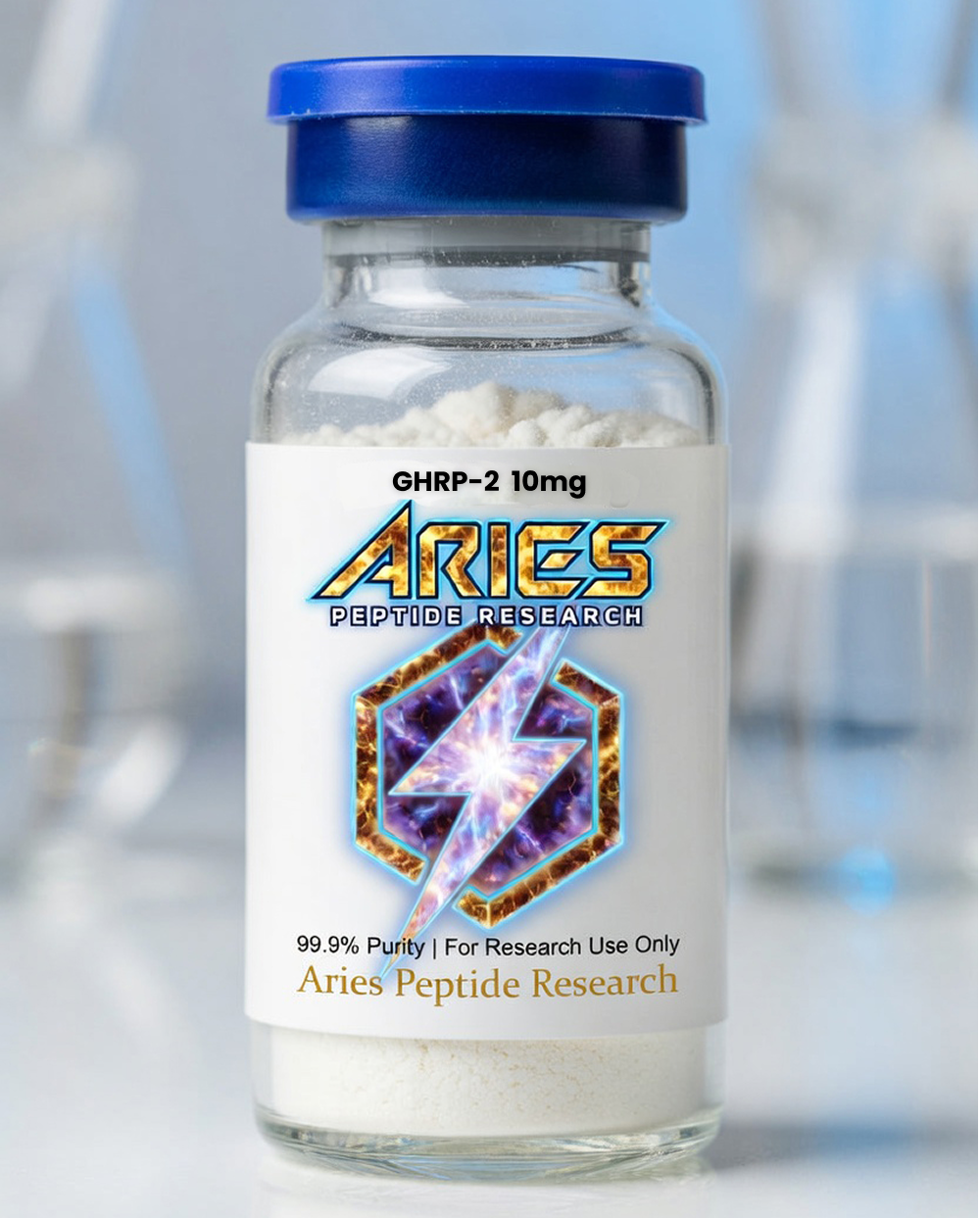
Description
When it comes to studying ghrelin receptors, GHRP-2 peptide is a major tool that researchers use all the time. This specific compound fits right into the family of growth hormone secretagogues to observe how it kicks off growth hormone release inside animal subjects. By mimicking how natural ghrelin behaves, it triggers specific reactions in the pituitary system, giving labs a clear path to watch over metabolic habits, appetite shifts, and complex endocrine systems.
Core Research Focus
Pituitary & Ghrelin Receptor Kinetics: Allows labs to observe how selective GHS-R1a stimulation promotes somatotroph activation without altering overall baseline stability.
Hormonal Axis & Appetite Tracking: Enables researchers to monitor metabolic shifts, appetite regulation, and cellular degradation pathways using pure GHRP-2 peptide.
Comparative Research Options: To evaluate secretagogue mechanisms alongside other ghrelin analogs, explore our Hexarelin GH Peptide. For deeper analysis into growth hormone pulse protocols, read our Ipamorelin Research Insights Guide. You can also review our laboratory standards on our About Us Page.
Technical Specifications
| Specification | Details |
| Primary Target | Growth Hormone Secretagogue Receptor (GHS-R1a / Ghrelin Receptor) |
| Documentation | COA verified peptides status included (How to Read COA) |
| Category | Growth Hormone & Peptide Bioregulators |
| Format | Sterile Lyophilized Powder |
Handling & Storage Guidelines
Storage Condition: Lock the dry vial away in deep freeze storage at -20°C for long-term stability, protected from direct light exposure.
Reconstitution & Handling: Reconstitute gently by running liquid media down the inside vial wall to preserve structural integrity. For indexed literature and scientific studies on GHRP mechanisms, consult PubMed GHRP-2 Studies.
Usage Safety: Protect from sharp temperature shifts post-reconstitution and avoid multiple freeze-thaw cycles to keep the setup stable.
Research Disclaimer: This compound is synthesized strictly for laboratory research and development purposes. It is not intended for human therapeutic, diagnostic, or clinical use.
Reviews
There are no reviews yet.