
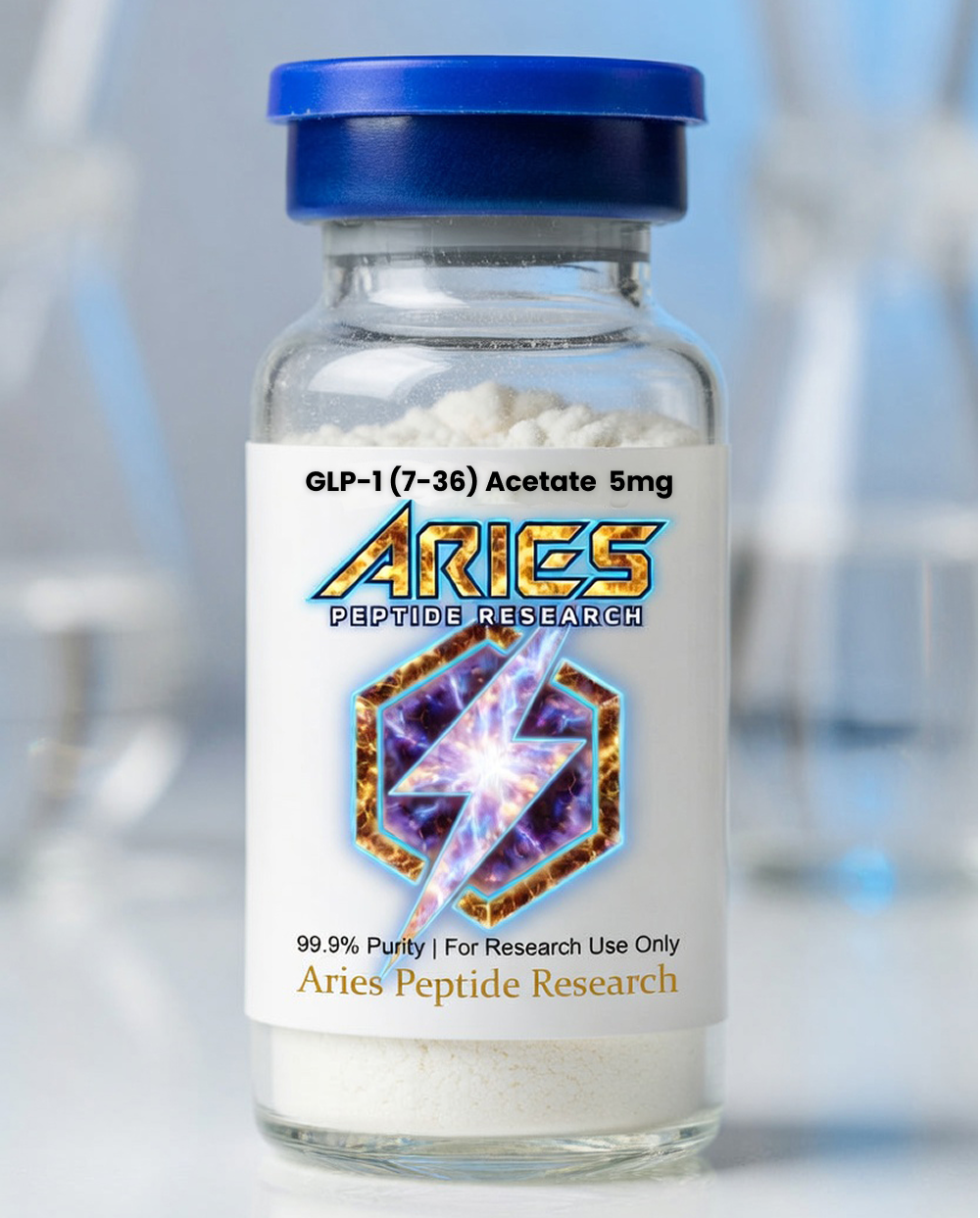
Description
Researchers track rapid cellular communication by analyzing how the GLP-1 (7-36) Acetate peptide functions during sudden insulin responses. As the primary biologically active cleavage product of native GLP-1, this short incretin chain interacts directly with pancreatic pathways to regulate glucose-driven hormone release.
Key Research Focus
Incretin Pathway Speeds: Helps laboratories monitor how short, native chains interact with pancreatic tissue during rapid glycemic shifts.
Beta-Cell Signaling: Allows researchers to evaluate receptor binding dynamics, tissue health markers, and glycemic control using pure GLP-1 (7-36) Acetate.
Comparative Incretin Analysis: To compare this native short chain against long-acting synthetic analogs, view our Dulaglutide Research Peptide. You can also review our laboratory quality standards on our About Us Page.
Technical Specifications
| Specification | Details |
| Primary Target | GLP-1 Receptor (Native Truncated Active Sequence) |
| Documentation | COA verified peptides status included |
| Category | Metabolic Peptides & Peptide Bioregulators |
| Format | Sterile Lyophilized Powder |
Handling & Storage Guidelines
Storage Condition: Keep the dry vial hermetically sealed at -20°C for long-term stability, protected from direct light exposure.
Reconstitution & Handling: Dissolve gently by running liquid media down the inside vial wall to preserve peptide chain structure. For indexed studies on native GLP-1 (7-36) amide signaling, consult PubMed research on GLP-1 7-36 Amide Studies.
Usage Safety: Divide into single-use fractions post-reconstitution to prevent structural degradation from repeated freeze-thaw cycles.
Research Disclaimer: This compound is synthesized strictly for laboratory research and development purposes. It is not intended for human therapeutic, diagnostic, or clinical use.


Reviews
There are no reviews yet.