
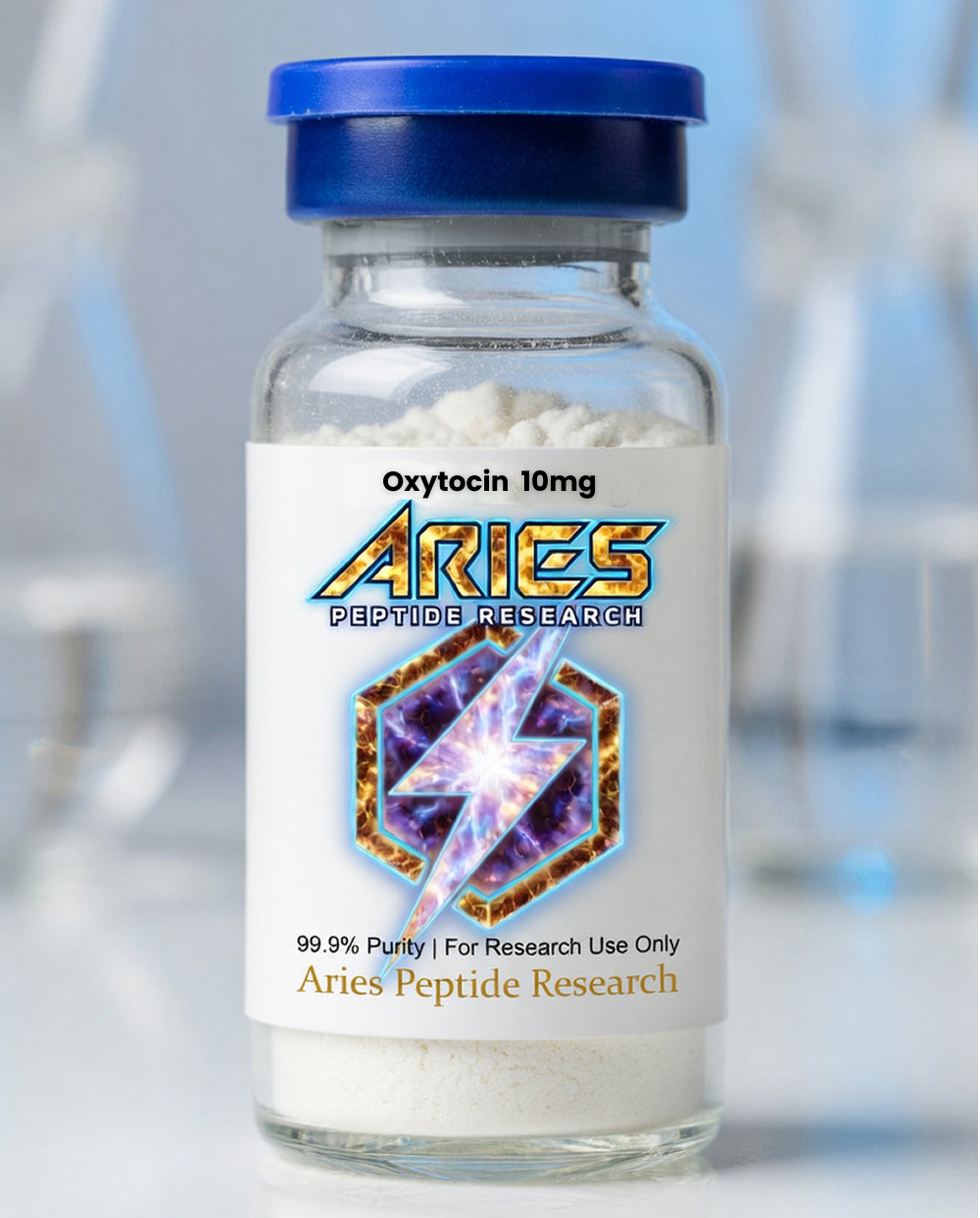
Description
Oxytocin research peptide is pretty much a synthetic nonapeptide analogue that functions just like the natural hormone and neuropeptide created right inside the hypothalamus. Over in the biochemical research field, scientists pay close attention to this compound due to its clear effects on neuroregulatory functions, social connections, and everyday neuromodulatory activities.
Core Research Focus
Neuroendocrine & Behavioral Signaling: Allows labs to observe how targeted nonapeptides regulate hypothalamic pathways, social behavior models, and central neuromodulation.
Neuromuscular & Cardiovascular Loops: Enables researchers to map out neuromuscular contractions, cardiovascular signaling, and adaptive stress responses using pure Oxytocin research peptide.
Comparative Research Options: To evaluate hypothalamic nonapeptide pathways alongside gonadotropin-releasing neuroendocrine models, explore our Kisspeptin-10 Peptide. For foundational short-chain regulatory frameworks, review our Peptide Bioregulators Research Guide. You can also inspect our laboratory standards on our About Us Page.
Technical Specifications
| Specification | Details |
| Primary Target | Oxytocin Receptors (OXTR), Hypothalamic & Cardiovascular Signaling |
| Documentation | COA verified peptides status included (How to Read COA) |
| Category | Neuroendocrine & Peptide Bioregulators |
| Format | Sterile Lyophilized Powder |
Handling & Storage Guidelines
Storage Condition: Lock the dry vial away in deep freeze storage at -20°C for long-term stability, protected from direct light exposure.
Reconstitution & Handling: Reconstitute gently by running liquid media down the inside vial wall to preserve structural integrity. For indexed literature and scientific studies on oxytocin receptor pathways, consult PubMed Oxytocin Studies.
Usage Safety: Protect from sharp temperature shifts post-reconstitution and avoid multiple freeze-thaw cycles to keep the setup stable.
Research Disclaimer: This compound is synthesized strictly for laboratory research and development purposes. It is not intended for human therapeutic, diagnostic, or clinical use.
Reviews
There are no reviews yet.