
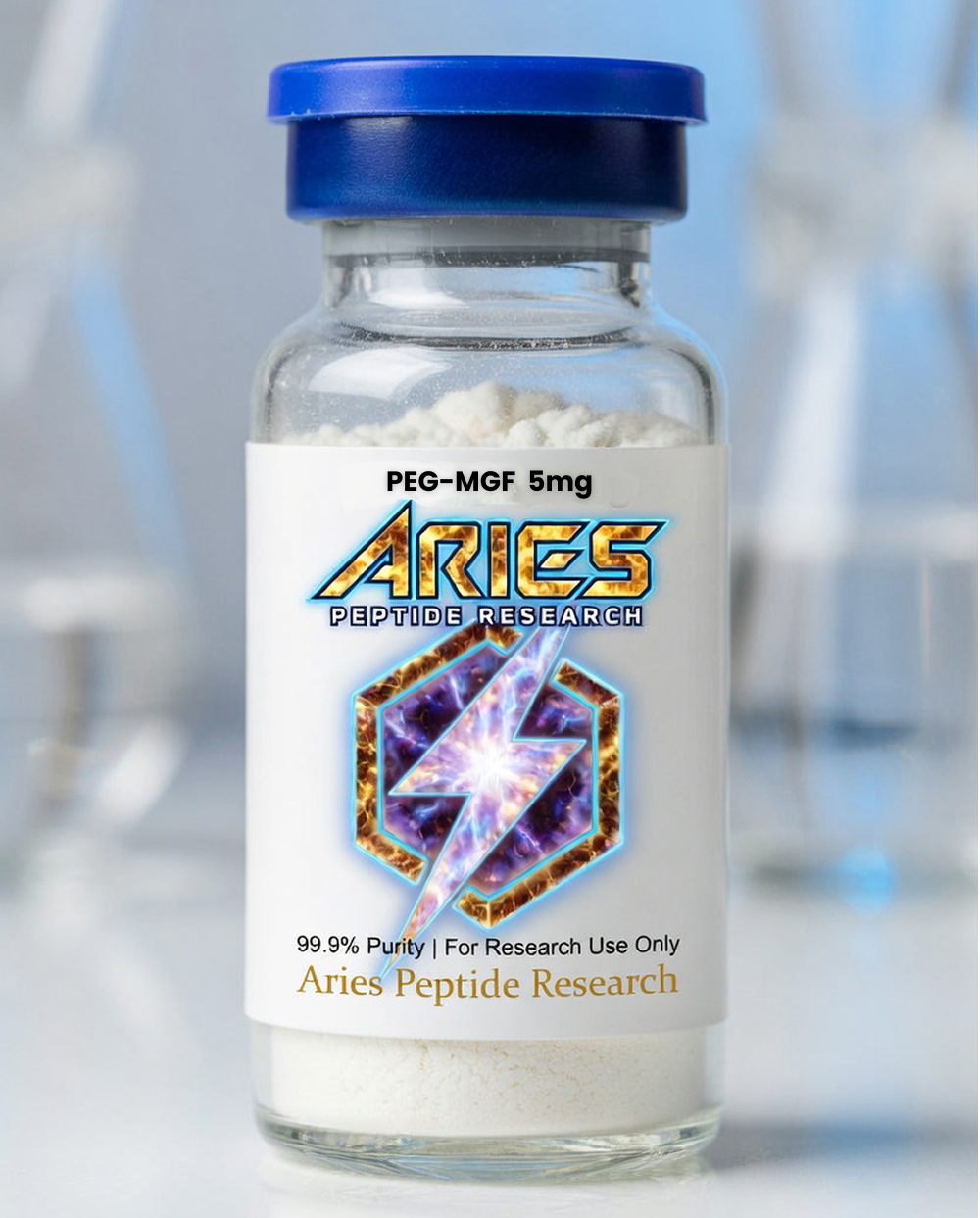
Description
PEG-MGF muscle repair peptide is basically a specialized splice variant of Insulin-like Growth Factor-1. It undergoes pegylation to improve its overall half-life inside biological environments. Over in the biochemical research field, labs pay close attention to this compound because it helps stimulate local tissue regeneration and cell division models by triggering structural rebuilding pathways.
Core Research Focus
Satellite Cell Activation & Repair: Allows labs to observe how prolonged half-life variants stimulate satellite cell proliferation and local tissue regeneration loops.
Structural Tissue Rebuilding: Enables researchers to monitor cellular development, muscle fiber remodeling, and tissue adaptation metrics using pure PEG-MGF muscle repair peptide.
Comparative Research Options: To evaluate satellite cell activation alongside dual-action microvascular and tissue recovery matrices, explore our BPC-157 + TB-500 Peptide Blend. For a detailed comparative analysis between healing mechanisms, read our guide on TB-500 vs BPC-157 Differences. You can also review our laboratory standards on our About Us Page.
Technical Specifications
| Specification | Details |
| Primary Target | Muscle Satellite Cells, IGF-1 Receptors & Extended Tissue Remodeling Pathways |
| Documentation | COA verified peptides status included (How to Read COA) |
| Category | Tissue Repair & Peptide Bioregulators |
| Format | Sterile Lyophilized Powder |
Handling & Storage Guidelines
Storage Condition: Lock the dry vial away in deep freeze storage at -20°C for long-term stability, protected from direct light exposure.
Reconstitution & Handling: Reconstitute gently by running liquid media down the inside vial wall to preserve structural integrity. For indexed literature and scientific studies on Mechano Growth Factor variants, consult PubMed PEG-MGF Studies.
Usage Safety: Protect from sharp temperature shifts post-reconstitution and avoid multiple freeze-thaw cycles to keep the setup stable.
Research Disclaimer: This compound is synthesized strictly for laboratory research and development purposes. It is not intended for human therapeutic, diagnostic, or clinical use.
Reviews
There are no reviews yet.